Japan's Hayabusa2 Achieves First-Ever Laser Ranging Experiment with an Asteroid
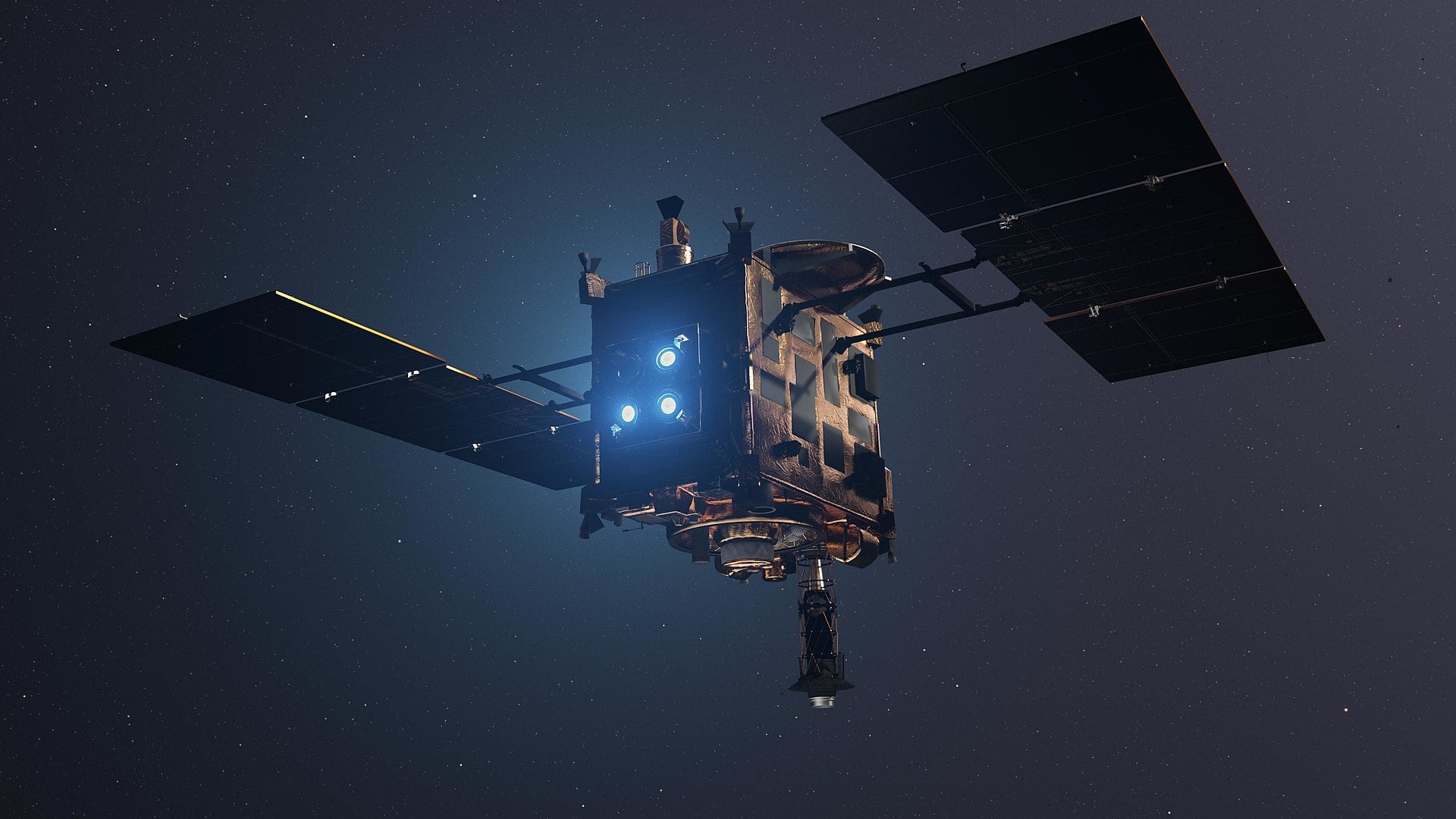
On a quiet Sunday in late July 2026, the silence of deep space was broken by a flash of light that would have gone unnoticed by any human eye but for a team of engineers watching from Earth. The Japan Aerospace Exploration Agency's Hayabusa2 probe, long celebrated for its daring sample-return mission to the asteroid Ryugu, had turned its attention to a new challenge: measuring the distance to the rock with laser precision. It was the first time in history that an interplanetary probe had successfully performed laser ranging while flying past an asteroid, a feat that transforms our ability to track these celestial wanderers with terrifying accuracy.
For decades, astronomers have relied on radar to measure the orbits of near-Earth objects, but those methods have limits, especially when it comes to small, irregularly shaped asteroids that pose potential risks to our planet. The Hayabusa2 team, realizing that a laser could provide a much sharper measurement of the asteroid's size, shape, and rotation rate, decided to take the risk. They fired a laser pulse from the spacecraft toward the surface of Ryugu, timing the return of the photons with nanosecond precision. When the signal bounced back, it confirmed not just the distance, but the roughness of the surface, data that was previously impossible to gather from this vantage point.
This moment is not merely a technical curiosity; it is a fundamental shift in how we monitor the solar system. By establishing laser ranging as a viable technique for asteroid flybys, we are effectively upgrading our planetary defense toolkit. Future missions will be able to determine the exact trajectory of a potential threat with a margin of error so small that it could mean the difference between a successful deflection maneuver and a catastrophic impact. The ability to know an asteroid's dimensions and orientation with such clarity allows us to model its behavior under the gravity of planets and moons with unprecedented fidelity.
The success of this experiment also speaks to the incredible resilience and ingenuity of the Japanese mission architects. Hayabusa2 was already a legendary vessel, having touched down on an asteroid, dug into the surface, and returned samples to Earth before this flyby event. To add a complex laser ranging operation to an already saturated schedule required a level of coordination and risk management that borders on the miraculous. It represents a new chapter in robotic exploration, where spacecraft are not just observers but active instruments of measurement, shaping our understanding of the cosmos in real-time.
As we look forward, the implications of this July 5th achievement ripple out toward every mission planning to visit the asteroid belt or the main body of our solar system. We are moving into an era where the tools we carry with us can redefine the data we return. The light that bounced off Ryugu that day was more than just photons; it was a promise that our reach is growing faster than our reach, illuminating the dark corners of our solar system with a clarity we never thought possible.