China on track to launch Mars sample-return mission in 2028: 'If accurate, this represents a Sputnik moment'
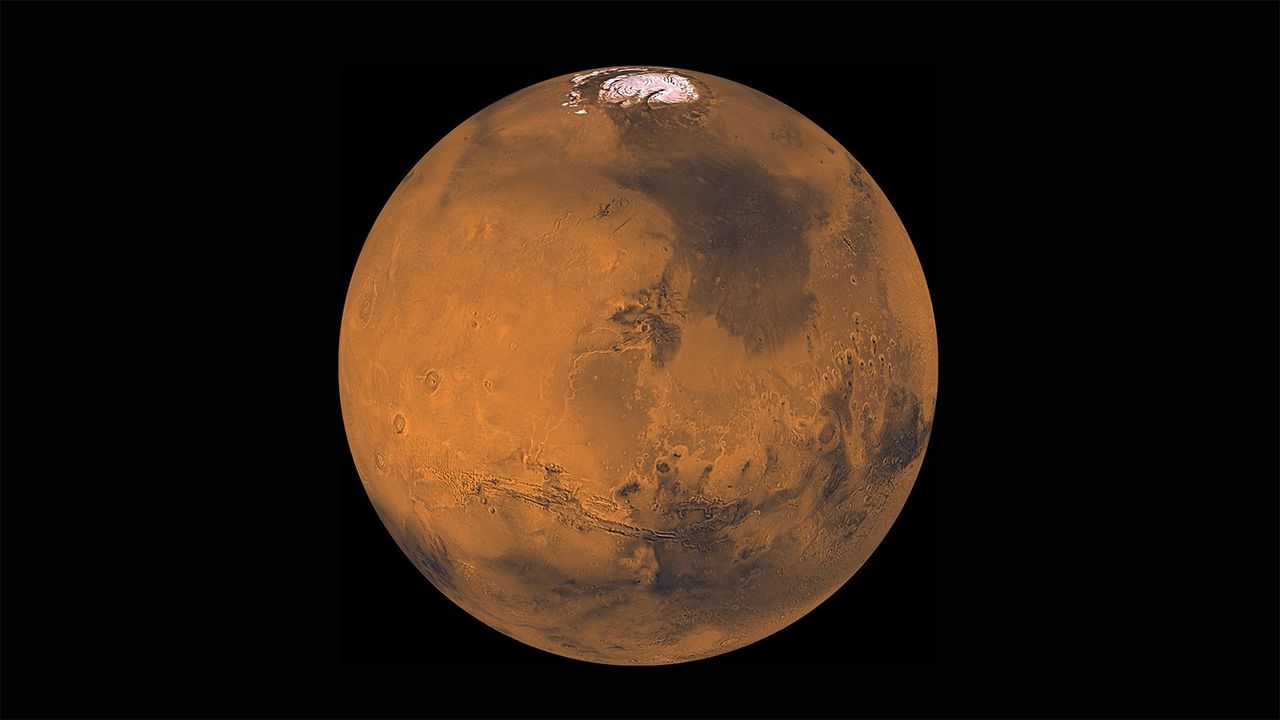
For decades, the most ambitious act in planetary exploration has been the two-way handshake between Earth and the Red Planet: send a probe down, and bring something back up. While NASA's Perseverance rover has been busy caching samples on Mars since 2021, waiting for a future ascent vehicle, China is racing ahead with its own version of this high-stakes relay, the Tianwen-3 mission. If recent reports from Beijing are accurate, a launch window for the orbital assembly is set for 2028, with the return capsule touching down in our backyard by 2031. This timeline is not merely a logistical schedule; it is a declaration of intent that positions China as the sole nation to have ever successfully retrieved samples from an alien world and returned them home.
The sheer audacity of this endeavor cannot be overstated. Sample return missions are the pinnacle of robotic spaceflight, requiring a precision that borders on the impossible. The Tianwen-3 architecture is a complex ballet involving an orbiter, a lander with a rover, and a separate ascent vehicle. The lander must touch down, drill into the Martian crust, and lift a sealed container into orbit without human intervention. Once in orbit, the orbiter must capture the ascent vehicle, ferry it through the void of space, and brake itself to re-enter Earth's atmosphere with a capsule intact. Every single link in this chain has failed for other nations at some point, yet China's engineers appear to have turned the corner on the theoretical phase and are now pushing into the execution phase.
If the 2028 launch date holds true, the implications for global space policy are seismic. We are talking about a potential "Sputnik moment," a term reserved for events that fundamentally shift the geopolitical landscape of technology and influence. The Soviet Union's launch of Sputnik in 1957 didn't just prove a satellite could orbit; it proved a superpower could reach beyond its atmosphere, triggering a decades-long race that reshaped our world. China's success with Tianwen-3 would similarly validate its status as a peer competitor in deep space exploration, forcing the United States and its allies to accelerate their own plans and fundamentally alter the strategic balance of the solar system.
Beyond the geopolitical chessboard, the science payload offers a unique opportunity to solve mysteries that rovers alone cannot. While rovers like Perseverance and China's own Zhurong can analyze the surface in situ, they are limited by their mobility and the inability to bring physical material back for high-resolution laboratory analysis. A return sample allows scientists to date the rocks with extreme precision, search for ancient microbial biosignatures in pristine conditions, and analyze organic compounds without the contamination risks inherent in open-air analysis on Mars. It is the difference between looking at a painting through a telescope and holding the brushstrokes in your hand.
The window for this mission is tight, and the stakes are incredibly high. A failure in Tianwen-3 would not just be a setback for Chinese aerospace; it would be a catastrophic blow to the credibility of the entire sample-return concept, potentially delaying global efforts for another decade. Conversely, a success would cement the next fifty years of Martian science and open a new chapter in our understanding of our solar system's history. As we wait for the official confirmation of the launch date, one thing is clear: the Red Planet is no longer just a destination for flybys and landings. It is a frontier where nations are preparing to bring the soil of another world back to the cradle of humanity.