The $1,999 iPhone Duo Is Apple's First Foldable, and It Has Some Clever Camera Tricks
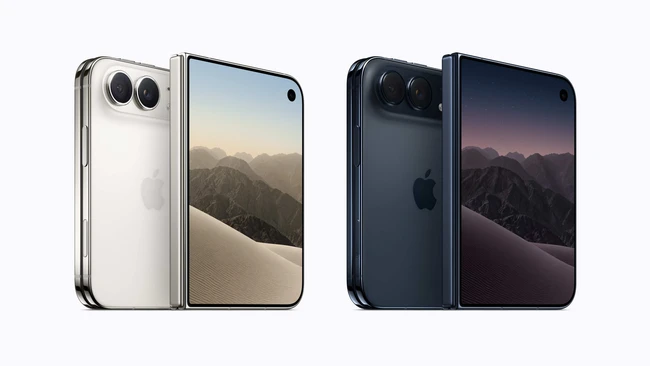
For decades, the smartphone industry has been stuck in a paradox where bigger screens meant heavier devices, forcing users to choose between portability and productivity. Apple's introduction of the iPhone Duo shatters this stalemate, not by simply making a larger phone, but by introducing a hinge mechanism that transforms a compact 5.4-inch slab into a 7.6-inch landscape canvas. This is not merely an incremental upgrade; it is a fundamental reimagining of form factor that finally allows the device to truly serve both the pocket and the workspace without compromise.
The engineering behind this transition is where the story gets fascinating. The inner display utilizes a polymer-based flexible panel that folds inwards, protected by a robust hinge system designed to withstand thousands of daily cycles. Apple has seemingly solved the durability issues that plagued early foldables from competitors, focusing heavily on the precision of the folding mechanism to prevent screen creasing and maintain structural integrity. This technical leap suggests that the future of mobile computing isn't about replacing our phones with tablets, but rather evolving the phone itself into a dynamic interface.
Beyond the hardware, the real magic lies in how the camera system adapts to this new geometry. Apple has leveraged the dual rear cameras to create computational photography that understands the fold. When the device is closed, the lenses work together in a standard configuration, but as it opens, the software dynamically adjusts the focal length and depth of field, essentially creating a zoom capability that was previously impossible without a physical periscope lens. It feels less like software simulation and more like the phone is intuitively aware of its own changing shape, using its environment to enhance the image.
This shift challenges the very definition of what a smartphone should be. We have become so accustomed to the static rectangle that a changing form factor feels alien, even when it offers superior utility. The iPhone Duo forces us to reconsider our habits: do we really need a separate tablet for video editing or immersive gaming, or can we simply unfold our phone? By integrating these capabilities into a single, foldable chassis, Apple is arguing that the distinction between mobile and desktop is a relic of an outdated design philosophy.
Ultimately, the success of the iPhone Duo depends on whether users will embrace the fragility of the hinge alongside the promise of the screen. While the outer display remains tough and scratch-resistant for everyday drops, the inner screen requires a new kind of care. However, if the camera tricks and the expanded real estate prove compelling enough, the psychological barrier to adopting a foldable device may dissolve faster than expected. We are witnessing the moment the smartphone stops being a tool we carry and starts being an environment we inhabit.