New horror game The Well Is Not Empty combines photophobic monsters with timer light switches and a lot of frenzied digging
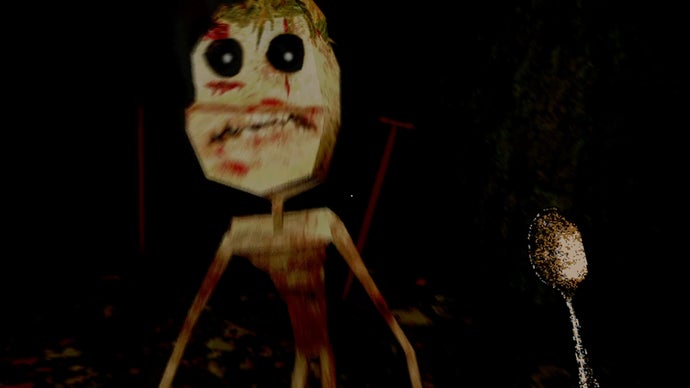
There is a sacred, almost liturgical rule in the horror genre: never let the monster see you. For decades, filmmakers and game designers have chanted this mantra, understanding that the greatest fear stems from the unknown, the shadowy silhouette that hints at malice without revealing its nature. The Well Is Not Empty flouts this tradition with audacious abandon, refusing to hide its creatures behind the curtain of mystery. Instead, it presents a scrawny, broken creature with xylophone teeth and eyes that genuinely evoke the suffocating depth of an actual well, hunkered up in the corner like a frightened puppy. It is a bizarre, unsettling choice, but one that somehow works, transforming the expected tension into a peculiar, almost pathetic intimacy that feels distinctly worse in a good way.
The game's core mechanic is built upon this rejection of the traditional "jump scare" model. Rather than relying on stealth to avoid detection, the player is armed with a timer light switch that dictates the rhythm of survival. You must manage the illumination of your environment, turning the light on to see the path ahead and off to deny the monster vision, yet the monster is already compromised. By making the creature visible and static, the game shifts the burden of fear from the monster's aggression to the environment's volatility. The true threat is no longer the beast itself, but the frantic, rhythmic digging required to progress and the precariousness of your own positioning within the room.
This design choice creates a unique psychological landscape where the player is forced to confront their own clumsiness rather than the monster's cunning. In many horror experiences, the player feels powerful when they master the tools to avoid detection; here, the tools are clumsy and the objective is to survive a situation where the monster is already aware of your presence but chooses not to act. The game asks you to engage in a frenzied dance of digging and light management, creating a sense of frantic urgency that stems from your own limitations rather than an external threat. It is a clever subversion that turns the tables on the player's expectations, making them the source of the chaos they must navigate.
Contextually, The Well Is Not Empty arrives at a time when the horror genre is often saturated with slasher mechanics and atmospheric dread that relies heavily on pacing and sound design. By stripping away the need to hide and replacing it with a puzzle-like interaction involving light and excavation, the game offers a fresh perspective on what it means to be vulnerable. It acknowledges the absurdity of trying to outsmart a creature that is already too obvious to miss, suggesting that sometimes the only way to survive is to accept the spectacle and focus on the mechanics of survival rather than the fear of the unknown.
Ultimately, the game is a testament to the idea that fear can be found in the mundane and the ridiculous. The broken xylophone teeth and the well-like eyes are not designed to instill primal terror, but to create a sense of uncanny valley discomfort that lingers long after the screen goes dark. By breaking the fourth wall of horror conventions, The Well Is Not Empty challenges players to find scares in the places where they are least expected, proving that sometimes the most terrifying thing about a monster is how clearly it is seen, and how little it cares.