APOD: 2026 September 17 – A Treasure Chest in the Carina Nebula
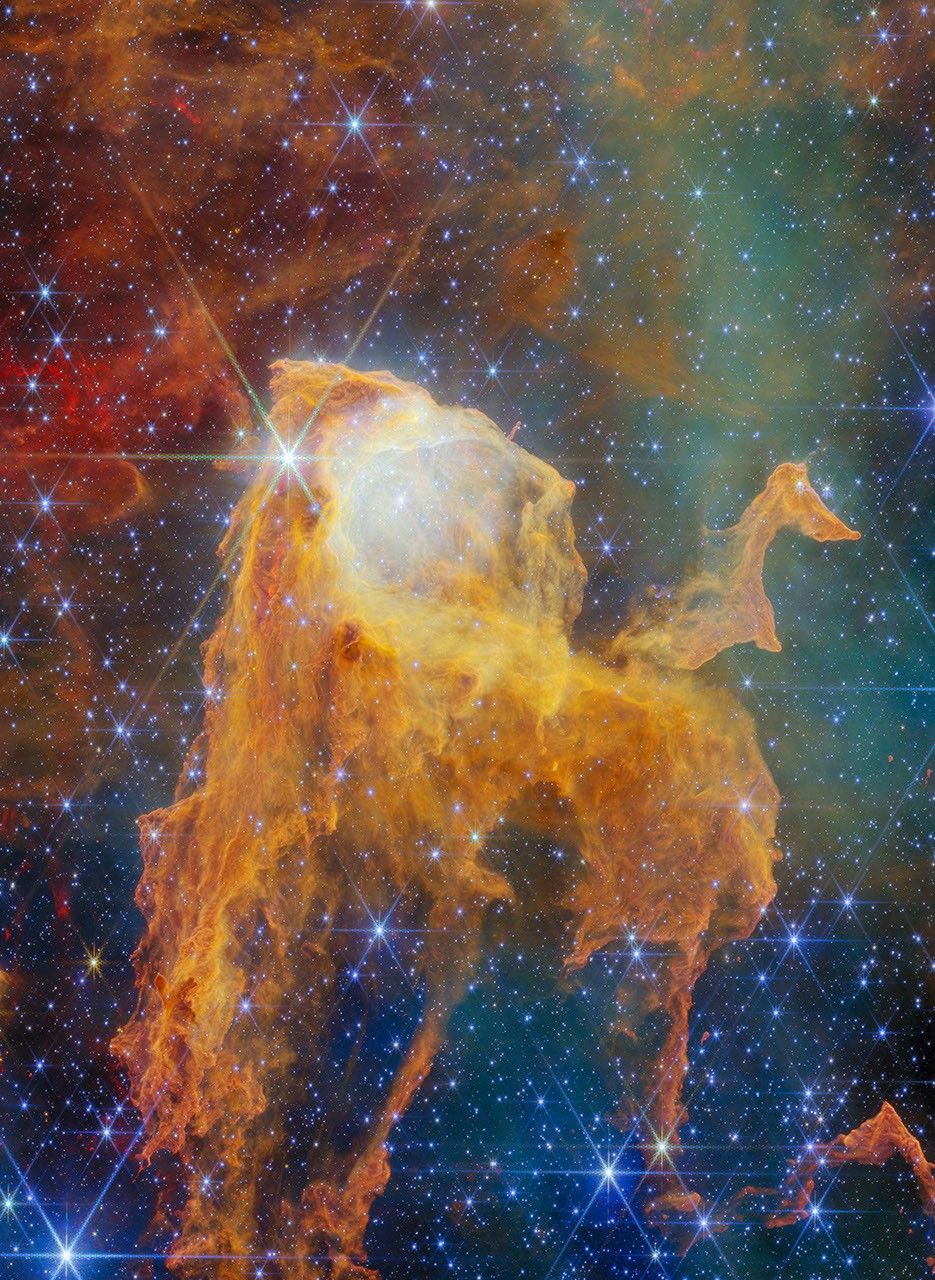
The Carina Nebula stands as a cosmic crucible, a chaotic and beautiful storm of gas and dust where the very architecture of our universe is being forged anew. To gaze upon a treasure chest within this region is to witness the birth of stars on a scale that defies human comprehension, a place where gravity wins its battle against entropy with ruthless efficiency. The nebula, named after the sailing ship that gave it its designation, is actually a vast stellar nursery where multiple clusters of young stars are emerging from the swirling clouds, each generation of stars carving out its own intricate landscape through fierce stellar winds and radiation.
What makes this particular view so compelling is the sheer density of the process. We are looking at a region where massive, hot blue stars have already ignited, blasting away the surrounding material and exposing the hidden gems within. These newly formed giants act as sculptors, eroding the dust clouds to reveal delicate pillars of ice and rock, often referred to as the "Star-Forming Regions." The light we see today has traveled for thousands of years to reach our telescopes, carrying with it the ancient history of a time when the cosmos was actively rewriting its own inventory with fresh, burning suns.
The color palette presented in this imagery is not merely aesthetic but physically informative. The deep blues represent the hottest, most energetic photons emitted by the O-type and B-type stars that dominate the cluster, while the wispy pinks and reds are the signatures of ionized hydrogen gas glowing under their intense heat. In the deeper, shadowed regions where the dust is thickest, we can infer the presence of cooler, younger stars still shrouded in their natal cocoons, waiting for the winds of their neighbors to clear a path to the surface. It is a dynamic environment where the balance between creation and destruction plays out in real-time.
Understanding the Carina Nebula also provides a window into our own solar system's past. While our Sun formed in a much quieter and less crowded environment, the physics of star formation here is universal. The mechanisms that drive the collapse of gas clouds, the accretion of material onto protostars, and the eventual ignition of nuclear fusion are the same processes that shaped our own neighborhood in the Milky Way. By studying these extreme examples, astronomers can refine the models they use to understand the quiet, solitary birth of stars like our own.
As we look further into the future of this nebula, the story is one of inevitable transformation. The massive stars responsible for illuminating this treasure chest will eventually exhaust their fuel and meet violent ends as supernovae, further enriching the surrounding gas with heavy elements necessary for the formation of rocky planets and life itself. The treasure chest we see now is a transient phenomenon, a fleeting moment in the long life cycle of a nebula, but one that contains the seeds of countless new worlds. It reminds us that the universe is not a static backdrop but a vibrant, evolving tapestry constantly being woven with new threads of light and matter.
On Bluesky? Meet HomeSky.
Follower analytics, a growth toolkit, scheduling and AI posting — built for Bluesky. Connect your account and use everything free for 60 days.
Try HomeSky free →