NASA’s New $4.3 Billion, 300MP Space Telescope Passed its First Tests One Million Miles Away
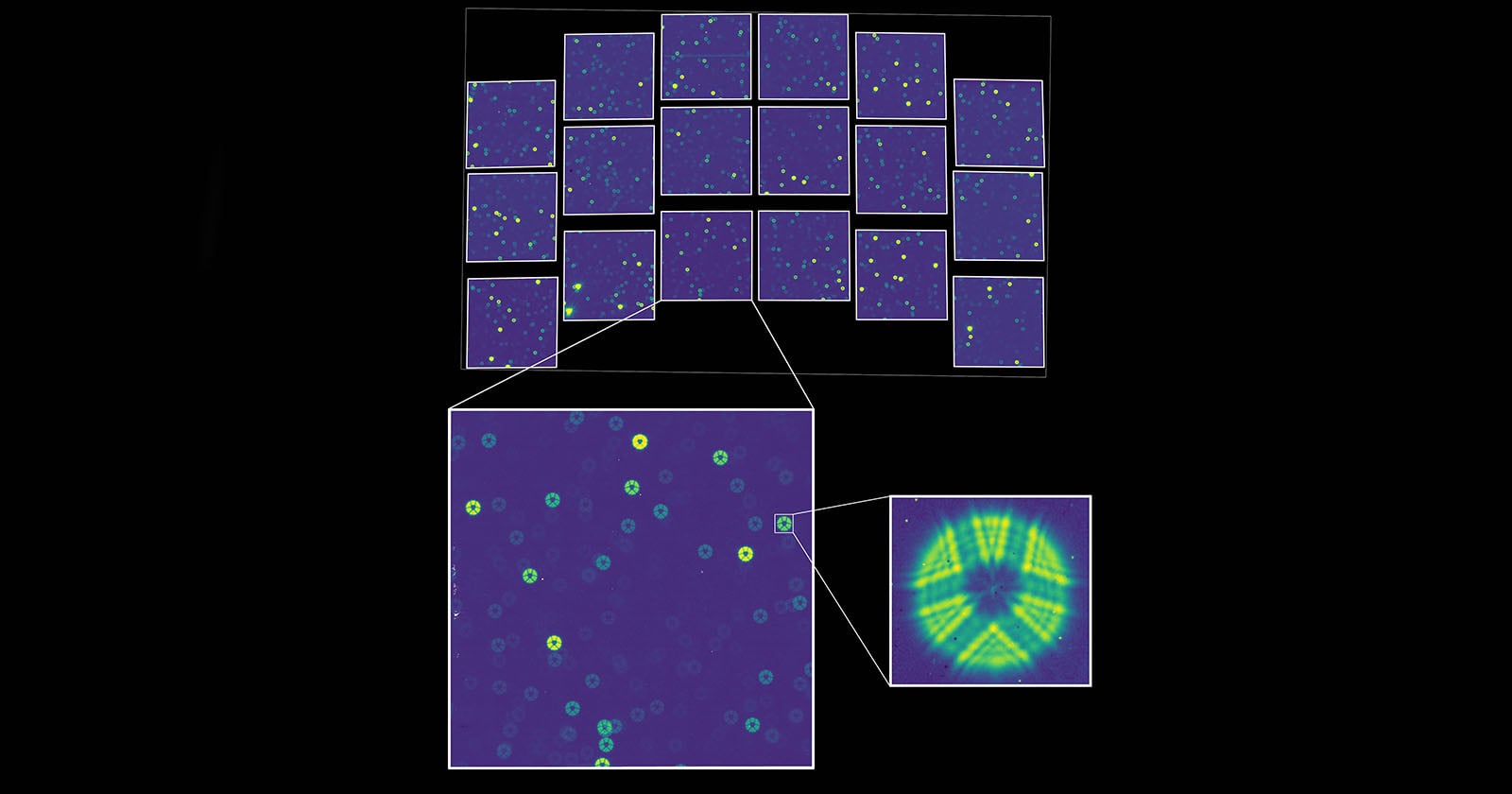
For decades, humanity has looked to the stars through windows that were far too narrow to capture the true breadth of the cosmos. We have traded resolution for sensitivity, sacrificing the ability to see the faintest details in exchange for the power to detect the dimmest whispers of distant galaxies. The arrival of the Nancy Grace Roman Space Telescope marks a definitive end to that compromise, launching into the silent expanse on August 30, 2026, with a Wide Field Instrument capable of resolving light with a staggering 300-megapixel fidelity. This is not merely an upgrade; it is a paradigm shift that promises to turn the night sky from a scattered collection of pinpricks into a rich, continuous tapestry of cosmic history.
The journey to this vantage point required a delicate dance with gravity, sending the telescope to the second Lagrange point, known as L2, roughly one million miles away from Earth. This location is not chosen arbitrarily; it is a gravitational sweet spot where the combined pull of the Earth and the Sun allows the spacecraft to maintain a stable orbit with minimal fuel consumption. Here, shielded by the spacecraft's own sunshield and the planet itself from direct solar glare, Roman can stare into the darkness without interference. It is at this precise distance that the first tests began, proving that the instruments designed to map dark energy and conduct a microlensing survey are functioning exactly as the most rigorous simulations predicted they would.
The 300-megapixel sensor represents a leap in optical engineering that redefines what is possible in space-based astronomy. Unlike previous missions that relied on stacking exposures to achieve high resolution, Roman's Wide Field Instrument captures the entire field of view in a single, coherent dataset. This capability is crucial for the mission's primary science goals, which include measuring the expansion rate of the universe and tracking the invisible mass of dark matter through gravitational lensing. The sheer volume of data generated by this sensor will require entirely new pipelines for processing, but the payoff is a level of detail that allows astronomers to peer into regions of the early universe previously thought to be beyond our observational reach.
Beyond the raw numbers, the implications of this launch extend to the very nature of how we understand our place in the cosmic order. The Roman telescope is equipped to survey a significant fraction of the sky over its operational lifetime, creating a map of the universe that is orders of magnitude more detailed than anything before it. This data will serve as a foundation for future discoveries, potentially revealing anomalies in the distribution of dark energy or offering new insights into the formation of the first stars. It transforms astronomy from a science of observation into a science of prediction, allowing researchers to model cosmic evolution with a precision that was once the stuff of science fiction.
As the telescope settles into its operational routine at L2, the scientific community watches with a mixture of anticipation and relief. The initial tests conducted one million miles away have yielded positive results, confirming that the complex mechanisms holding the massive optics steady are responding to the subtle forces of space as intended. This validation is critical; it ensures that the billions of dollars invested in the mission are translating into a functional instrument capable of answering some of the deepest questions about the universe. The Roman Space Telescope is now officially awake, ready to begin the long, patient work of looking out, reminding us that while our tools are limited by physics, our curiosity remains boundless.
On Bluesky? Meet HomeSky.
Follower analytics, a growth toolkit, scheduling and AI posting — built for Bluesky. Connect your account and use everything free for 60 days.
Try HomeSky free →