2 satellites just burned up in Earth's atmosphere — and scientists were watching from a private jet. Here's why
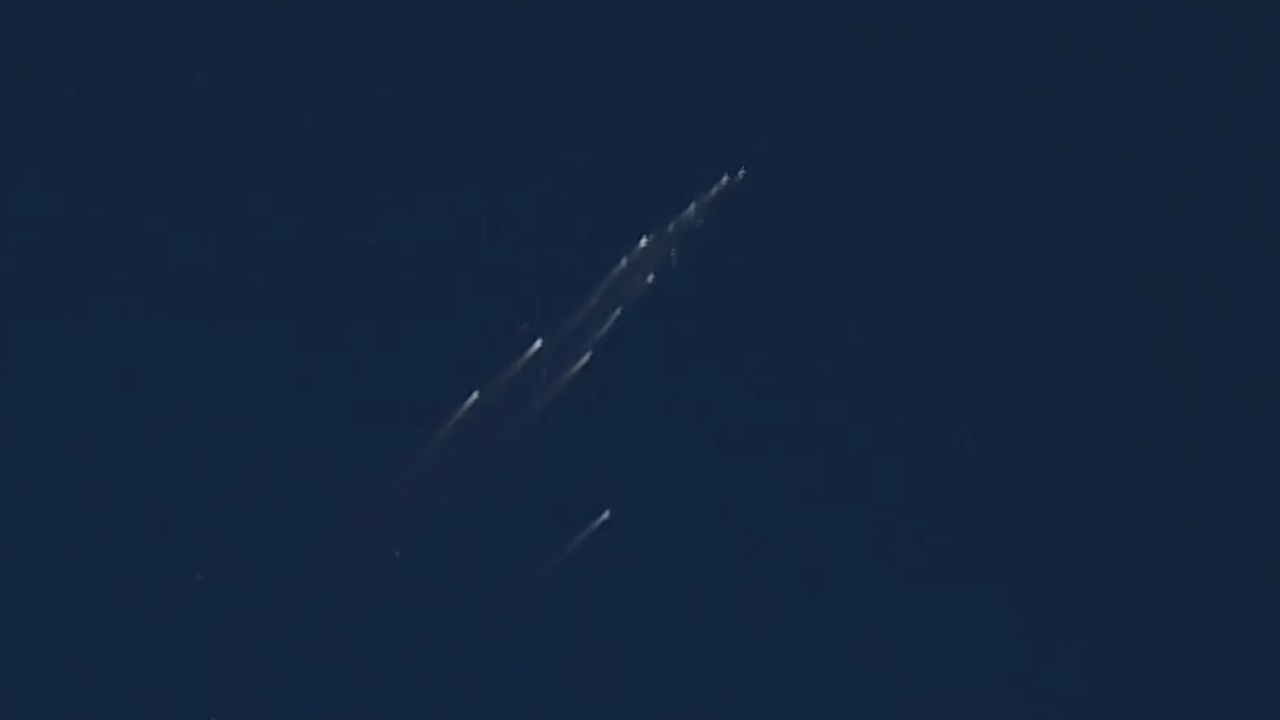
Imagine the view from a private jet slicing through the stratosphere, not for leisure, but to witness the fiery death throes of human ingenuity. Two satellites, long past their prime and adrift in the dark, have begun their final descent through Earth's atmosphere, transforming from silent metal beacons into brilliant streaks of light. This isn't a mere spectacle; it is a critical data-gathering mission led by a team of researchers who traded the safety of a laboratory for the turbulence of the sky, chasing these dying objects to understand the environmental toll of our spacefaring ambitions.
The core question driving this high-stakes observation is simple yet profound: how much pollution are we actually adding to our air? As these satellites plunge, their outer shells vaporize, injecting aluminum oxide and other particulates into the mesosphere and lower thermosphere. While the atmosphere eventually clears these particles, the sheer volume of debris generated by the growing number of satellites in orbit raises alarming questions about the cumulative effect on our upper atmosphere. By flying alongside the reentry in real-time, scientists can measure the concentration of these particles and the specific chemical reactions occurring during combustion, providing a snapshot of the atmospheric footprint left by the space economy.
This approach represents a fascinating evolution in how we monitor our own infrastructure. Historically, we relied on ground-based telescopes or orbital sensors to track debris, but those methods often miss the immediate, localized impact of a reentry event. By deploying aircraft like the NASA DC-8 or similar platforms, researchers get a unique vantage point that combines high-resolution sampling with direct visual observation. It is a kinetic pursuit, requiring precise timing and coordination, as the team must match the trajectory of the falling metal to ensure they are in the right place at the right moment to collect the most valuable data.
The implications of this data extend far beyond academic curiosity. As commercial spaceflight accelerates and the concept of orbital mega-constellations moves from theory to reality, the frequency of these atmospheric burns will increase exponentially. If we can establish a baseline understanding of how these burns affect ozone levels, cloud formation, or even the temperature of the upper atmosphere, we can begin to model the long-term stability of our environment. The researchers on that jet were essentially conducting a stress test on the boundary between our world and the cosmos, seeking to ensure that our expansion into the heavens does not inadvertently poison the air beneath us.
Yet, there is a poetic irony in watching humanity's machines burn up. These satellites, once the pinnacle of engineering, designed to connect us, observe us, and defend us, are now returning to the silence of the atmosphere in a blaze of light. The private jet carrying the scientists serves as a stark reminder of our dual nature as a species: we are both the architects of this new frontier and the first line of defense against its unintended consequences. As they record the burning trails, they are not just measuring pollution; they are measuring the cost of our ambition.