Reviewing The Peak Design Travel Tripod
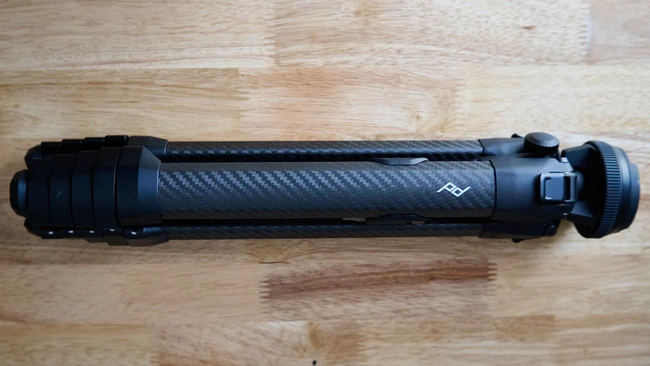
The quest for the perfect travel tripod has long been a battle of compromise, a tug-of-war between the rigid stability needed for sharp, noise-free images and the lightweight portability required to hike miles with your gear. For years, I assumed that if you wanted both, you would have to accept a significant penalty in one area or the other, often sacrificing build quality for weight or vice versa. That assumption, however, felt like it was missing the bigger picture of how modern photography actually happens in the wild.
Peak Design's new Travel Tripod arrived not as a radical reinvention of physics, but as a masterclass in material science and industrial design that finally solved this equation. The core innovation lies in the construction: a blend of carbon fiber and aluminum that offers a structural integrity previously reserved for much bulkier, heavier systems. It feels less like a piece of equipment you are lugging up a mountain and more like a sophisticated extension of your body, something that folds away so compactly it can vanish into the side pocket of a standard camera bag without feeling like an afterthought.
What truly sets this piece apart, however, is the way it respects the photographer's workflow rather than dictating it. The integrated ball head is not just an add-on but a fundamental part of the system, allowing for rapid setup and adjustment with one hand while keeping the center of gravity low and centered. This design choice eliminates the wobble and delay that often plague traditional tripods with separate heads, turning a task that used to take minutes into a fluid motion that takes seconds. It is the difference between fighting your gear and letting your gear disappear so you can focus entirely on the scene.
The psychological weight of carrying a tripod is a real phenomenon, often described as the "tripod tax" on one's daily limit of hiking or travel time. By shaving off ounces and reducing the overall footprint, Peak Design has effectively removed a major barrier to entry for spontaneous photography. Suddenly, the decision to stop and compose a shot at sunset isn't followed by a mental calculation of whether the weight of a tripod is worth the risk of fatigue. This shift changes the nature of travel photography from a planned, heavy-duty operation into something more organic and responsive to the environment.
Of course, no piece of equipment is without its trade-offs, and this tripod is no exception. The unique folding mechanism means it cannot be configured in every traditional way that a standard tripod can, and the integrated head, while brilliant for most scenarios, might feel limiting to those who require specific, highly technical adjustments for macro or astrophotography. Yet, for the vast majority of landscape, street, and travel photographers, these compromises are not only acceptable but preferable to the bulk and complexity of the alternatives.
Ultimately, the success of this design is measured not in the specs on a spec sheet, but in the moments it allows you to capture that you otherwise would have missed. It represents a shift in the industry where tools are designed to facilitate the art rather than hinder it. When your tripod is unobtrusive, reliable, and easy to use, the camera becomes the only thing that matters, and that is a feeling every photographer chases.